Hello, I’m Shelley Tremain and I would like to welcome you to the one hundred and thirty-first installment of Dialogues on Disability, the series of interviews that I am conducting with disabled philosophers and post to BIOPOLITICAL PHILOSOPHY on the third Wednesday of each month. The series is designed to provide a public venue for discussion with disabled philosophers about a range of topics, including their philosophical work on disability; the place of philosophy of disability vis-à-vis the discipline and profession; and their experiences of institutional discrimination and exclusion; as well as personal and structural gaslighting in philosophy in particular and in academia more generally; resistance to ableism, racism, sexism, and other apparatuses of power; accessibility; and anti-oppressive pedagogy.
The land on which I sit to conduct these interviews is the traditional ancestral territory of the Haudenosaunee and Anishinaabeg nations. The territory was the subject of the Dish with One Spoon Wampum Belt Covenant, an agreement between the Iroquois Confederacy and the Ojibwe and allied nations around the Great Lakes. As a settler, I offer these interviews with respect for and in solidarity with Indigenous peoples of so-called Canada and other settler states who, for thousands of years, have held sacred the land, water, air, and sky, as well as their inhabitants, and who, for centuries, have struggled to protect them from the ravages and degradation of colonization and expropriation.
My guest today is Sara Ellenbogen. Sara is a philosophical counselor and an assistant editor for The Philosopher’s Index. The author of Wittgenstein’s Account of Truth, which was short-listed for the Canadian Philosophical Association Book Prize, Sara now publishes in moral philosophy, specifically on the concept of respect. She recently completed a memoir, currently on submission to presses, entitled An Education in Ableism: My Graduate Career as a Bipolar Philosopher. When Sara is not working or catching up with friends, she meditates listening to classical music, jazz, zydeco, and Irish fiddle music.
Please note: This installment of Dialogues on Disability includes discussion of suicide.
Welcome to Dialogues on Disability, Sara! You have a Ph.D. in philosophy and currently work as an assistant editor for The Philosopher’s Index. Since editing philosophers’ writing is one of my favourite activities, I am especially interested in your educational and professional journey to this job. Please describe this journey for our readers and listeners, as well as anything else you wish to tell us about your background.
My professional title is Assistant Editor, but what I do for The Philosopher’s Index is indexing, not editing other philosophers’ writing. I read journal articles and choose keywords from a thesaurus that capture what an article is about so that philosophers can find literature that is relevant to the topics that they are researching. I have been working for The Philosopher’s Index since 2019. I applied for a job with The Philosopher’s Index after I walked by their book-exhibit table at an American Philosophical Association meeting and read a notice that they were hiring. It is a fantastic job to have, both because it provides a service to the profession and because I get to keep up to date with what has been written in philosophy.
[Description of photo below: Looking up into the lens, Sara, who is leaning against a wall, smiles widely. She has dark shoulder-length hair and is wearing a patterned top.]
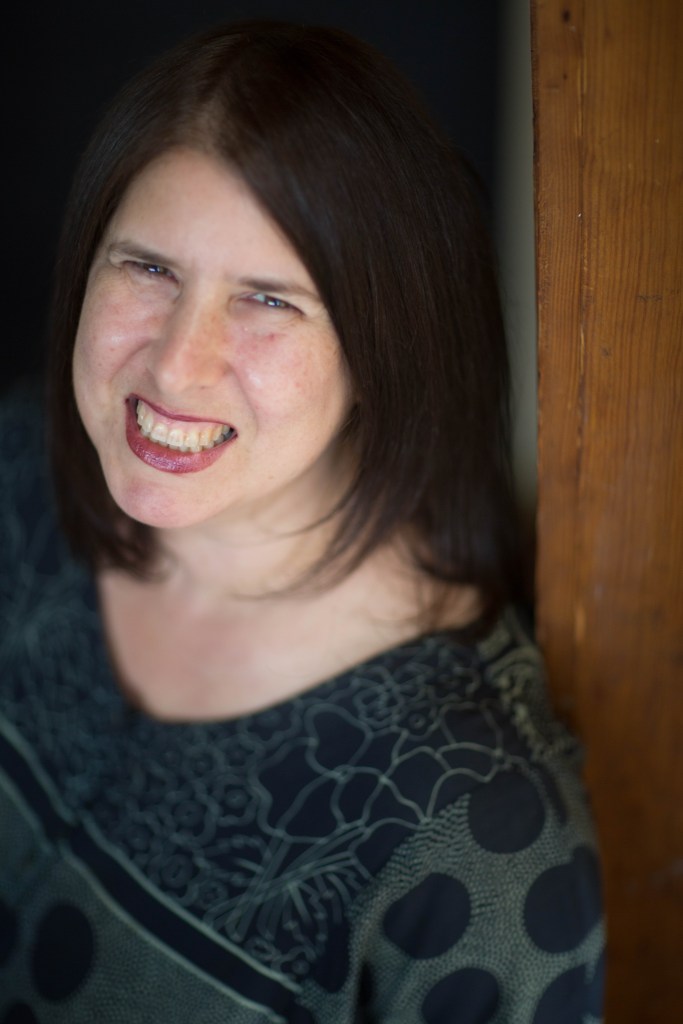
I have been blessed to have had opportunities to do what I enjoy most—namely, research and engagement with other philosophers’ work—since I finished my Ph.D. I took my Ph.D. in 1998 from The University of Toronto (U of T), where I specialized in epistemology and wrote my first book, Wittgenstein’s Account of Truth. I am a member of the American Philosophical Practitioners Association (APPA). I was a research affiliate at the Massachusetts Institute of Technology for a while. Before that, I was a visiting scholar at Boston University. In addition to my job of indexing as an assistant editor for The Philosopher’s Index, I do actual academic editing. I have been a member of the Cambridge Academic Editors Network for more than a decade and have edited interesting works, including Vaughana Feary’s “Philosophical Interventions with Psychiatric Patients” which appears in the APPA journal, Philosophical Practice, and Kieran Setiya’s Midlife: A Philosophical Guide. Some of my own work draws on work that I have indexed or edited.
My search for tenure-track jobs consumed most of my time during my last year in graduate school. When that job search did not end successfully, I was incredibly saddened by the thought that I would not be able to pursue philosophy professionally. Although I did not initially pursue a career in philosophy, I eventually found ways to do so.
When I think of the trajectory of my life—which I describe in my recently completed memoir, An Education in Ableism: My Graduate Career as a Bipolar Philosopher—I am struck by the extent to which the ethos of a place can contribute to the extent to which someone flourishes.
I was educated in a profoundly elitist public school system in Lexington, Massachusetts, where I was bullied from the first day of kindergarten onward, likely because I was anxious. The bullying exacerbated the anxiety, which made it more difficult to work up to the potential that I knew that I had. At the end of elementary school, I was not placed on the track of students who were expected to perform at the highest level. The middle-school teachers did not treat students on the track on which I was placed with the same level of respect that students on the top track were given.
In high school, I floundered and was frustrated. I wanted to excel but did not know how and felt as if I would have been able to learn how in other circumstances. I was tremendously ambitious and, when in my senior year, I was not accepted anywhere but the state school, I was devastated. I was bitter, too, because I believed that I would have performed better if I had been given the opportunity to do so. I had not been given that opportunity because I had been classified as an underachiever at a very early age. That I had tried to learn in an environment where I was allowed to be bullied was a major contributing factor to my classification as such. So, a certain social Darwinian ethos played a central role in determining where I subsequently studied.
The ethos of the University of Massachusetts/Boston was very different. I flourished there. I discovered philosophy during my first semester and fell in love with it. I knew what I wanted to do with the rest of my life, and the philosophy faculty, as well as the university itself, offered pretty much everyone who wanted to excel the resources that they needed. When I had my first hypomanic episode during my second semester, my Introduction to Psychology professor, Helen Tager-Flusberg, supported me by making an appointment for me at the counseling center. The counseling center enabled me to navigate the rest of the semester as hypomanic. When, a few semesters later, I withdrew from school because of a major depression, I was able to re-enroll with no questions asked because of my earlier association with the counseling center. The faculty and students in the philosophy department were incredibly collegial; I thrived; I won the Book Award for Distinction in Philosophy; I headed for The University of Toronto, believing that all philosophy departments and all universities were like that.
In fact, I found U of T much more like my high school, where inclusivity was not valued (as it was at U. Mass/Boston) and respect for all students was not a given. I did well there, but—as the only openly queer graduate student in the department at the time recently confirmed to me—it was an unhappy experience for many people: queer people, people of color, and, as I would learn, people with bipolar disorder. Although I published while I was at U of T, experiences that I had at the end of my program contributed to my floundering after I graduated.
Floundering in a culture where many people think that successful-ness is a decisive criterion for assessing capability was challenging too. The strength of my desire for a life in philosophy was definitely an important factor in rebuilding a life in philosophy. Yet another factor was meeting philosophers who both viewed me and treated me as another philosopher rather than as a bipolar woman. Shelley, that is why I so admire your dedication to changing the ableist ethos that can impact the trajectory of a life. These values inform my own work as a philosophical counselor.
What is philosophical counseling? Why do you do it and how?
Philosophical counseling is an alternative to psychotherapy where the counselor and the client explore the client’s reasoning about what led them to seek counseling. Together they uncover the client’s tacit, unexamined assumptions and examine the client’s inferences. Sometimes, they will explore whether the client is committed to their assumptions upon reflection. Often, the counselor will suggest alternative ways of thinking. The difference between philosophical counseling and psychotherapy is that when the psychotherapist asks, “Why do you believe what you believe?” they are generally asking, “What experiences do you think led to form this belief?” When the philosopher asks, “Why do you believe what you believe?” they are asking, “How would you justify this belief if you were asked to do so?” Many people seek out philosophical counseling because they have confronted a difficult decision or a moral dilemma, they do not know how to make the best choice about it, and they want to explore the issues that it involves with a philosophical guide to arrive at a reasoned conclusion.
I do philosophical counseling because I think that my graduate training in philosophy—which all counselors certified by the American Philosophical Practitioners Association are required to have—enables me to offer people something valuable that many psychotherapists do not offer. Guiding a person in distress who wants to explore their reasoning is extremely effective in helping them to change mindsets and thereby become less distressed. The philosophical counselor’s approach to the counselor-client relationship is very different from many psychotherapists’ approach to this relationship. Many psychotherapists think that the purpose of therapy is to change the client through a method of confrontation. As Lou Marinoff, the president of the APPA, says in his book Philosophical Practice, however, “The counselor is not a critic, not even a constructive one, but rather a guide who awakens or instills in the client the capacity to philosophize for himself.” I think that the latter approach is the right one; so, I want to offer this alternative way of counseling to people in need.
Sara, your current research explores why we owe each other respect and what it means to treat someone with respect. Please tell us about this research.
I outline my position on respect in “What Does Rationality Have to Do with Respect? Recommendations from a Philosophical Counselor with Lived Experience of Bipolar Disorder for Engaging with Psychotic Patients,” a paper that is forthcoming in Philosophical Practice later this year. In the paper, I argue that what it means to treat a person—in Kantian terms, a rational being and, in Donald Davidson’s terms, a rational animal—with respect is to treat them in the way that we ourselves expect to be treated, that is, as we ourselves expect to be treated given our status as members of the social world that we inhabit as rational beings, beings who understand reasons. What we expect is to have our wishes treated as important rather than as necessarily overriding considerations; that is, we wish to have the importance of our wishes acknowledged. The norm which dictates that we should give someone our reasons for why we choose to do what they do not want us to do (when we make these choices) licenses this expectation.
By making it explicit that we have reasons, we show that we are not acting in this way simply because we want to do so and have the power to do so. What underlies this norm is a very widely held worldview that no human need is more important than any other; that, in principle, no human need deserves more than another to be fulfilled. No human being, just as a person, is more important than any other. Put differently, what underlies this norm of ours that licenses our sense of entitlement to respectfulness is belief in the ideal of egalitarianism.
In my recently completed memoir, An Education in Ableism: My Graduate Career as a Bipolar Philosopher, I argue that the contemporary academy is inegalitarian, despite its professed ideals, insofar as the expectation that we—as members of the social world of rational beings—hold, i.e., to be treated with respect, frequently is not met. People who, for whatever reason, have been lower performers are treated without respect in academia or at least with less respect than others. In other words, academia lacks norms of general respectfulness. Given that being treated without respect is a dignitary harm that can impede performance, treating certain individuals without respect denies them fair equality of opportunity to fulfill their potential. The academy can become truly egalitarian only if academics actively foster norms of general respectfulness.
Sara, you have mentioned your memoir, An Education in Ableism: My Graduate Career as a Bipolar Philosopher. What was your impetus to write it?
I wanted to expose the ableist practices that changed the trajectories of the lives of some of my classmates at The University of Toronto and nearly changed the trajectory of my own life. In my time as a student there, I struggled with severe mental health challenges; in particular, I experienced anxiety at the beginning of my Ph.D. program. I was denied mental health services at the U of T counseling center when I asked for them; hence, I ended up hospitalized. After discharge, I fortuitously happened to meet a graduate student in clinical psychology who led workshops for students who struggled with anxiety. She welcomed me into the group, where I received support and learned coping strategies that enabled me to flourish.
Others who did not have such fortuitous experiences had worse outcomes. Fellow graduate students were routinely denied university services. One dropped out, another committed suicide. The consensus among the graduate students in the philosophy department was that the suicide and attrition were partly attributable to the fact that the ethos of the department and the university was—as one student put it—social Darwinian. These people might have been able to earn doctorates if they had been given the institutional support that they were denied. I wrote my first publication and a dissertation that became my monograph once I received the support that I needed. The withholding of the institutional support that some students with mental health challenges need to earn degrees is motivated by the ableist assumption that people with mental health challenges do not belong in academia. Yet they do belong, both because they have a right to respect and because inclusion of them benefits academia and society as a whole. Shelley, for a long time, I have admired the work that you do to stop this exclusion.
Although the events of the story that I tell about my experiences at The University of Toronto took place in the 1990s, not much has changed. The University of Toronto’s 2019 Presidential and Provostial Task Force on Student Mental Health, initiated in response to student complaints, states that “although many community members acknowledge a general decrease in stigma related to mental illness, many of those consulted (students, staff, and faculty) indicate that mental illness is still perceived as a weakness, something you do not talk about, and a barrier to success at U of T.”
Nor is The University of Toronto the only university where mental health problems are stigmatized, where the careers and indeed the lives of students who struggle in these ways are put at risk. In the early 2020s, Yale settled a lawsuit that was brought due to a student’s suicide that followed from the university’s practice of pressuring students with mental health challenges to take medical leaves and, in turn, denying them subsequent re-admission. According to a 2022 article in The Chronicle of Higher Education, at least fifty-four top-ranked colleges in North America have policies for removing students from campus for health reasons. Universities classify threats of self-harm as “disruptive” behaviour that cannot be allowed on campus. So again, the assumption is that people with mental health struggles don’t belong.
In the preface of your memoir, you write that you were subjected to a form of profiling in your department. Please explain the form that the profiling took and the incident that led to it.
I went to another campus to observe a friend’s undergraduate class in a building where a professor with whom I had worked also happened to teach. A few days later, the graduate coordinator emailed me that my behaviour in relation to that professor could be perceived as harassment. In response, I said, “What are you talking about?” The grad coordinator told me that the professor had said, “Could you keep her away from me? She followed me to the building I teach in.” When I told the grad coordinator that I had gone there for another reason and that I had neither sought out nor seen the professor, he simply said, “So, they made a mistake.” When I pointed out that falsely accusing someone of stalking behaviour is very serious, he said that if I had a problem with it, I should complain to the chair. I did, but the complaint was ignored.
Revenge is not my motive for telling the story in the book. I changed names.
My reason for telling the story is this: both my professor’s assumption that I was engaging in stalking behaviour when I entered a public building and the graduate coordinator’s uncritical acceptance of that assumption demonstrate how prone to mental health profiling many people are, even in academia. I was treated differently from the way that I would have been treated if I had performed the same action (i.e., had gone to a public place where I did not usually go) at a time when I was not mentally ill. The assumption that was made about my action was based upon a stereotype of mentally ill people as likely dangerous, a stereotype that is not supported by evidence. The Ontario Human Rights Commission defines profiling in precisely this way: as singling out an individual for greater scrutiny and differential treatment based upon a stereotype. While mental health profiling may manifest differently from racial profiling, it, too, is damaging.
A second reason for telling the story is that the response—or, rather, the lack of response—to the discovery that the allegation of stalking behaviour had been a mistake illustrates that mentally ill people are treated with less respect than other people. A complaint from a person who was not mentally ill about a baseless and false allegation that had caused them damage would have been treated much more seriously. We have a norm within our social world that dictates that when we cause a person damage by making a baseless and false allegation, we explicitly acknowledge that they have not deserved the damage and that a regrettable mistake has been made. Too often, that norm is taken as not applying to mentally ill people, just as it is too often taken as not applying to people of color.
The acceptance of profiling is wrong because it treats the person who is profiled with less respect. Profiling says, in effect, that it does not matter whether the person profiled has been damaged by false accusations because people in the group to which they belong should be singled out for differential treatment. Treating profiling as acceptable says to the victim, “Well, in this case, my belief that you were guilty was false, but it was reasonable for me to assume that you were guilty (because you are black) (because you are mentally ill). I do not, therefore, owe you an apology for damage that I may have caused you because my action was justified.”
One account of why we owe one another respect—Peter Baumann’s account—is that we owe it to one another because we need it. Not being treated with respect generally causes damage. As Lawrence Blum says, one’s confidence can be undermined when one is not treated with respect, is treated disrespectfully. In my case, the way that I was treated had an impact on the hope and trust with which I approached life and people, which in turn impacted the trajectory of my life after I defended my dissertation without getting a teaching job. That is not why I did not end up teaching. I would not have taken a teaching position anyway because teaching is not my forte. I am better suited to philosophical counseling and indexing scholarship in philosophy. However, if I had not been profiled in graduate school, if I had not been disrespected, I probably would have had both the optimism and the confidence that I needed to find niches for myself a lot sooner.
Sara, how would you like to end this interview? Are there topics or concerns that we have not discussed that you would like to address? Would you like to recommend some books, articles, blogs, or videos that readers and listeners should explore for more information about the issues that you have addressed?
No, I think that we have covered everything. I so much appreciate having had the opportunity to talk about these issues in this vital interview series.
Sara, you have indeed said a great deal in this interview. I am so grateful to you for doing so. I am certain that many disabled philosophers who read or listen to this interview will likewise be grateful to you for your remarks throughout the interview.
Readers/listeners are invited to use the Comments section below to respond to Sara Ellenbogen’s remarks, ask questions, and so on. Comments will be moderated. As always, although signed comments are preferred, anonymous comments may be permitted.
The entire Dialogues on Disability series is archived on BIOPOLITICAL PHILOSOPHY here.
From April 2015 to May 2021, I coordinated, edited, and produced the Dialogues on Disability series without any institutional or other financial support. A Patreon account now supports the series, enabling me to continue to create it. You can add your support for these vital interviews with disabled philosophers at the Dialogues on Disability Patreon account page here.
__________________________________
Please join me here again on Wednesday, March 18, 2026, for the next installment of the Dialogues on Disability series and, indeed, on every third Wednesday of the months ahead. I have a fabulous line-up of interviews planned. If you would like to nominate someone to be interviewed (self-nominations are welcomed), please feel free to write me at s.tremain@yahoo.ca. I prioritize diversity with respect to disability, class, race, gender, institutional status, nationality, culture, age, and sexuality in my selection of interviewees and my scheduling of interviews.
 BIOPOLITICAL PHILOSOPHY