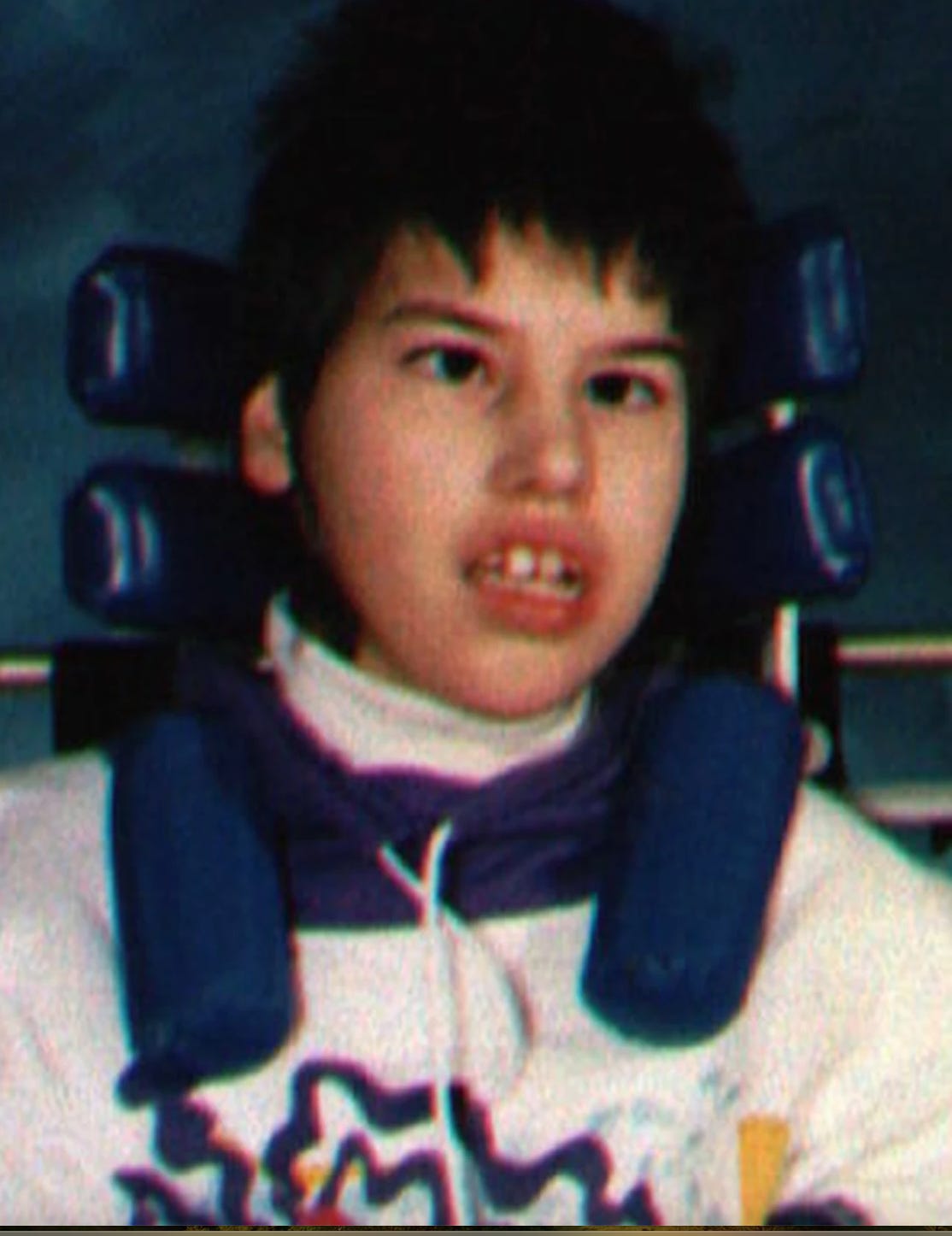
The eugenic culture of Canadian philosophy, in particular, and Canadian and indeed North American society, more generally, did not emerge with the entrenchment in Canadian law and policy of Bill C-7 (the legislation that I discuss in “Disaster Ableism, Epistemologies of Crisis, and the Mystique of Bioethics,” my chapter in The Bloomsbury Guide to Philosophy of Disability); nor will this eugenic culture have reached its apex with the repeated attempts by the editors of Feminist Philosophy Quarterly to limit and mar my critique of bioethics as the institutionalized pedagogical mechanism of this culture (and, thus, their repeated violations of my academic freedom). Indeed, the reformist approaches to bioethics that disability bioethicists articulate almost certainly guarantee the extension and expansion of this eugenic culture, in part because these bioethicists (like bioethicists in general) consistently fail to understand the apparatuses of power that produce the culture and the emergence and development of their very own field.
Although philosophers such as Robert Wilson have aimed to trace the long history of eugenics in Canadian society, one can convincingly argue that the contemporary eugenic culture in Canadian philosophy and Canadian society more widely took its impetus from the murder by her father of disabled Saskatchewan tween Tracy Latimer in 1993. With the murder of Tracy, Canadian bioethicists found their niche, the dissemination of their claim to a unique form of expertise, expertise that could earn them media coverage, grant money, and social and professional recognition and status more widely.
Yesterday was the thirty-third anniversary of Tracy’s death at the hands of her father, Robert Latimer. On her Substack yesterday, Canadian disability policy analyst and author Gabrielle Peters remembered Tracy Latimer and how the media and philosophers in Canada lionized him, diminishing the value of disabled people in doing so. Below, I have copied Gabrielle’s post which includes appendices. Nevertheless, I strongly encourage you to go to Gabrielle’s Substack and subscribe for a variety of excellent insights about (for example) disability, ableism, disabled people in Canada, and poverty. You can find Gabrielle’s Substack here.
___________________________________________________________________________
SELLING-OUT TRACY
By
GABRIELLE PETERS (MSSINENOMINE)
Note: Beneath this post are my post from last year and an excerpt from my chapter in a book. They are provided to fill in the historical context and for additional information for those who need it.
Today is the BC Election. It is also the anniversary date of Tracy Latimer’s murder. Because she was disabled, most of the country wept for her father, Robert Latimer – the murderer – not Tracy – the 12 year-old murder victim. The leaders of the death cult and various other euthanasia enthusiasts crawled out from their crypts, turning Tracy’s poisoned corpse into a podium from which to share their demands. Headlines. Polls. International press. The feeding frenzy for mercy killing and euthanasia was unsatable. Sensationalism and contempt were packaged as concern. Tracy’s humanity was ignored and her murderer’s was reworked to align with the Canadian farmer myth.
The year before the current premier of BC, David Eby, became the Executive Director of the B.C. Civil Liberties Association it had filed a parole appeal on Robert Latimer’s behalf. While Eby was E.D. the BCCLA filed the now infamous Carter case. He was a vocal proponent of euthanasia. These are not just two cases led by the same organization, they are two cases underpinned by the same belief system – that it is better to be dead than disabled.
The BCCLA likes to wax poetic about individual liberal autonomy all day long but the reality is the state will not fund or provide you with a lethal injection unless they believe your choice to die is a rational one. That is what makes you killable. If you are not disabled – a broad political category created by taxonomy, the invention of ‘average’ and formalized by eugenics, that encompasses chronic and mental illness, impairments, various conditions and other characteristics of behaviour, body and mind that the state deems appropriate which may or may not be actually based in medical science – then your sad, despondent, suicidal feelings are judged as just obvious and logical.
You can’t simply roll up to a MAiD provider and demand to be killed because you had a bad perm or because you lost your job – at least you can’t (yet?) unless you are disabled.
But this year I am thinking less of the murderers and more about those who purport to honour Tracy’s memory while betraying the lessons she left us with. Lessons that were written in her blood.
If Tracy Latimer were screened for MAiD she would have been judged Track 1 not Track 2.
Just as at the time of Tracy’s death the lines have been drawn. The people who believed her father was right to murder her succeeded in changing Canadian law. They carved an exemption to homicide, sanctioned by the same state that denies us a very long list of promised and essential rights under the UN Convention of Rights of Persons with Disabilities.
The defenders of Latimer/MAiD are responsible for where we are now.
But from where I sit, on this day especially, those trying to use Tracy’s legacy as they retreat and equivocate, weighing the injustice and merits of one Track versus another are betraying it.
At least the enemies have the courage of their convictions.
Tracy deserves better defenders.
[COPY] October 24th, 1993.
Dark thoughts on a dark day. Content Warning: Discussion of Filicide of Disabled Child
Content Warning: Discussion of Filicide of Disabled Child/ Ableism
Every year this day gets harder. Isn’t that the opposite of how these things are supposed to go? Isn’t the passage of time supposed to heal the wounds?
Of course nothing about what happened on this day in 1993 to Tracy Latimer was how things are supposed to go.
Children are not supposed to be taken outside, put in the front seat of the family truck and murdered by their parent.
Alone, except for one end of a hose – the other attached to the exhaust pipe.
Children aren’t supposed to look out the window and see their father waiting impatiently for them to die.
Murdered children are supposed to be grieved not dehumanized.
Murderers of children are supposed to be vilified not lauded as folk heroes.
When Robert Latimer’s crime was finished, the collective crimes began.
I set aside time on this day every year to read, reflect…breathe.
I try to keep my mind on Tracy and not on the man who murdered his own daughter and tried to get away with it.
I try to think about what she might be like today instead of thinking about the public execution of her humanity by the Canadian media.
I listen to music because Tracy loved music. I shut out the Canadian public who thought killing her was an act of courage.
But this year it is harder to achieve.
I have a dark thought plaguing my mind that I wish I did not. How does Robert Latimer mark this day? Does he still have photos of the family truck – a.k.a. the murder weapon and scene? Is the blanket he wrapped her dead body in folded in the linen closet?
Does Laura still look lovingly into the eyes that watched her daughter die? Does it reassure her to know that if their other child is injured or ill and an inconvenience for them, she can count on Robert to kill them? Or kill her?
Or is this just a non-event in the Latimer life? Is it just another day when nothing of significance happened?
We know it was not his first act of violence against a girl, but assume it was the first time he took a life. We know he put thought into which method of murder and planned the day out so it must be memorable to him in some way.
I want to wish for ghosts to be real so Tracy can haunt that house, but that is not the after-life I would wish for her.
Tracy, a tween, almost a teen, girl who was murdered outside her home and then carried upstairs and laid in her bed by her murderer/father, hoping no one would ask questions, as if she had just suddenly inexplicably, at the age of 12, died.
I would like to say that the grim reality of her murder led to positive change for disabled children and adults in Canada but of course the very opposite occurred. It inspired other parents of disabled children to do the same. It led more to declare their desire. And ethicists came forward telling them they were right to want to do so and that Canada should make it legal.
The people who cheered Tracy’s murder got their way in the Supreme Court and Parliament.
MAID became legal. It’s not yet legal for children but the DWD death cult is working hard to make it – and more -happen.
I’m going to assume this is a happy day in the Latimer home. Smiling murderers are not unique. Making one a national hero is.
As Jennifer Baumbusch said to me in a text exchange, Tracy’s murder should have been the end of discussions about euthanizing disabled people in Canada, “but really just propelled it forward.”
Maybe one day this country will mourn Tracy and confront its guilt.
But not today.
Excerpt from my chapter in Disability Intimacy:
Assisted suicide and euthanasia were first legalized in 2016. The original legislation limited these to people whose “natural deaths” were considered “reasonably foreseeable”—a term that has no scientific meaning and was left up to interpretation. While the public believed that only people who were actively in the process of dying would be offered or receive MAiD, this was not the case.
Early on, there were indications the interpretation of eligibility by the courts would be broad. In 2017, an Ontario court ruled that a seventy-seven-year-old patient known as “AB,” whose only condition was osteoarthritis, fit the legal criteria for MAiD.
Similarly, Alan Nichols, who was hard of hearing and had a history of depression, and some other medical conditions, none of which were life-threatening, received MAiD in 2019.
It was also clear prior to the expansion of MAiD that disabled people were dying due to ableism and Canada’s failure to uphold its commitments under the United Nations’ Convention on the Rights of Persons with Disabilities (UNCRPD).
Archie Rolland and Raymond Bourbonnais both died by MAiD after raising the inhumane conditions in their long-term care facilities. What makes their situations unusual is that they became publicly known despite the tight seal of secrecy around MAiD.
The enthusiasm with which some in healthcare professions promoted and pushed MAiD as an option to their patients was also apparent even before its expansion under Bill C-7. When Sheila Elson told a physician treating her disabled daughter, Candice Lewis, that she was not interested in hearing about MAiD as an option, the physician told her she was being selfish. For Maclean’s magazine I interviewed Corinna Iampen, herself a physician, who was asked about her interest in MAiD while in the hospital following a non-life-threatening injury.
The legalization of MAiD followed years of lobbying, most notably by the group Dying With Dignity (DWD). DWD gained broader public attention because of its vocal support for a man who murdered his twelve-year-old disabled daughter. In 1994, a jury convicted Robert Latimer of the second-degree murder of his daughter, Tracy. He appealed his conviction to the provincial and later Supreme Court of Canada. He was again convicted at a second trial but with the recommendation that he be eligible for parole after only one year. This in turn led to further appeals, which continued until 2001, at which time the Supreme Court of Canada upheld a life sentence with no eligibility for parole for ten years. Throughout the entire process, some things remained constant: disabled people and their organizations were forced to argue as intervenors in the courts and in the court of public opinion that killing us is not a “compassionate” act; the media created a sympathetic and extremely sanitized portrayal of Robert Latimer while simultaneously failing to humanize or accurately portray Tracy, the murder victim; and the right-to-die movement capitalized on the media attention and public sentiment to catapult their issue onto the national stage.
Marilynne Seguin, then executive director of DWD, was quoted in 1994 in the New York Times arguing that a ten-year sentence would be “quite unconscionable” given that “the Latimers had already lived under a sentence during the twelve years that Tracy was alive.”
Analysis at the time by University of Alberta professor Dick Sobsey concluded that the media coverage of the Latimer trial was “irresponsible, biased, and dangerous.” Sobsey was concerned the coverage may have played a role in two other deaths since Tracy’s murder and felt “it is almost certain to contribute to further crimes against people with disabilities.”[*]
More than sixty thousand people signed a petition in support of reducing his sentence. and over one hundred people stated they would agree to serve one month of Latimer’s sentence for him. A 1999 poll found 73 percent of Canadians believed Robert Latimer should have received a more lenient sentence and 41 percent believed mercy killing should not be against the law.
The Senate’s 1996 Standing Committee on Euthanasia and Assisted Suicide included discussion about involuntary euthanasia, and the final report recommended creating a separate separate offence of “compassionate homicide” with less severe penalty.
Eike Henner Kluge, a tenured professor at the University of Victoria and founder and first director of the Canadian Medical Association’s Department of Ethics and Legal Affairs, argued openly for involuntary euthanasia of disabled infants, defended the actions of Robert Latimer, and even suggested someone should have ended Tracy’s life earlier.
A similar argument for euthanizing some disabled infants was repeated in 2022 by Dr. Lois Roy, of the Quebec College of Physicians, before the Special Joint Committee on MAiD. The committee recommended expanding MAiD to include mental illness as a sole qualifying criterion—though that was delayed until March 2024. Advance directives and assisted suicide and euthanasia for children and youth deemed “mature” enough to consent to their deaths are among the committee’s recommendations.
MAiD is a public declaration by the Canadian state that they find the assertion that it is better to be dead than disabled to be a reasonable position they not only support but will enable by funding lethal injection house calls.