Hello, I’m Shelley Tremain and I would like to welcome you to the one hundred and thirty-seventh installment of Dialogues on Disability, the series of interviews that I am conducting with disabled philosophers and post to BIOPOLITICAL PHILOSOPHY on the third Wednesday of each month. The series is designed to provide a public venue for discussion with disabled philosophers about a range of topics, including their philosophical work on disability; the place of philosophy of disability vis-à-vis the discipline and profession; their experiences of institutional discrimination and exclusion, as well as personal and structural gaslighting in philosophy in particular and in academia more generally; resistance to ableism, racism, sexism, and other apparatuses of power; accessibility; and anti-oppressive pedagogy.
The land on which I sit to conduct these interviews is the traditional ancestral territory of the Haudenosaunee and Anishinaabeg nations. The territory was the subject of the Dish with One Spoon Wampum Belt Covenant, an agreement between the Iroquois Confederacy and the Ojibwe and allied nations around the Great Lakes. As a settler, I offer these interviews with respect for and in solidarity with Indigenous peoples of so-called Canada and other settler states who, for thousands of years, have held sacred the land, water, air, and sky, as well as their inhabitants, and who, for centuries, have struggled to protect them from the ravages and degradation of colonization and expropriation.
My guest today is Laura Cupples. Laura is a teaching assistant professor in the Department of Philosophy at University of Tennessee Knoxville (UTK) and an affiliated faculty member for the Women, Gender, and Sexuality (WGS) Interdisciplinary Program at UTK. Laura’s areas of specialization include bioethics, philosophy of disability, feminist philosophy, and philosophy of science. She has published in IJFAB: The International Journal of Feminist Approaches to Bioethics, Synthese, and Disability & Society. She enjoys eating out with friends and watching international murder mysteries.
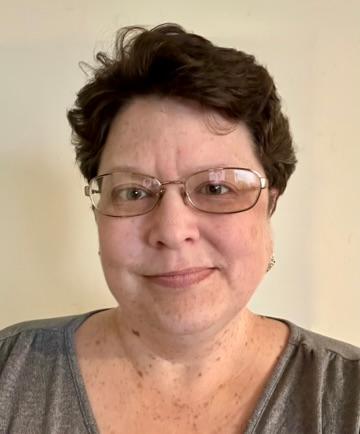
[Description of photo below: A smiling Laura looks directly into the lens for the shot. She is a white woman with short dark hair and is wearing wire-framed glasses and a taupe-coloured tunic.]
Welcome back to Dialogues on Disability, Laura! I interviewed you in December 2020. As I have said in the past, our faithful followers love to keep abreast of the lives of their favourite disabled philosophers through Dialogues on Disability. Please tell us about the significant (by your own standards) events that have occurred or unfolded in your life since your previous interview.
Thanks Shelley! When we did the previous interview, I was adjuncting at Gonzaga University following a research postdoc with the Collaborative on Health Reform and Independent Living at Washington State University. In the fall of 2021, I joined the teaching faculty in the University of Tennessee Knoxville’s (UTK’s) Department of Philosophy as a postdoctoral teaching associate, working with Professor Mariam Thalos. I transitioned a year later into a long-term position as Teaching Assistant Professor. In the fall of 2023, I joined the affiliated faculty for the Women, Gender and Sexuality (WGS) Interdisciplinary Program at UTK. During my time at UTK so far, I have taught undergraduate courses in bioethics, philosophy of science, contemporary moral problems, and philosophy of feminism. In other words, I am finally at a point professionally where I get to teach mostly in my areas of specialty, which has been quite nice. I am no longer constantly on the market, moving around from job to job every year or two, which has been a huge relief!
I think that the friendships that I have built with other scholars in the past 6 years constitute the most significant developments that have taken place in my life since our previous interview. During this time, I have been very fortunate to have had several professional mentors, such as Joe Stramondo. I think that Joe has been an important figure in the lives of a lot of early career disability scholars, not just mine. He was hugely encouraging to me during the years in which I was on the job market and took an interest in my research. For example, he invited me to participate in an American Society for Bioethics in the Humanities (ASBH) panel on “Disability Representation in Bioethics” that took place in October of 2022. In October 2025, he joined a panel that I organized at the ASBH on “Combatting Structural Gaslighting through Disability Narratives.” This past summer, I had the opportunity to do a reading group with Joe and Jenny Tillman on Sami Schalk’s book Black Disability Politics. Not only did Joe take me under his wing, he took an interest in mentoring my student co-author Keenan James.
Mariam, Kristina Gehrman, and Nora Berenstain—my senior colleagues at UTK—have played a huge role in my professional development. Mariam was, as I said, my postdoc advisor. She and I share an interest in empirical philosophical research. During my first year at UTK, she introduced me to a lot of literature in the philosophy of social science. She also made it possible for me to stay on at UTK long term. Kristina and Nora, too, have both been wonderful advocates and sounding boards over the years. I am especially grateful to Nora for both inviting me to join the affiliated faculty for WGS three years ago and helping me further develop my expertise in that area of philosophy.
I have also gotten to know Marissa Diaz at University of Illinois-Chicago, who took over my postdoc position at the Collaborative on Health Reform and Independent Living after I left the group. She does really cool qualitative disability research on end-of-life care, the Latinx community, and folks with intellectual and developmental disabilities. She was living in Knoxville and working remotely for my old research group when we met. It has been a lot of fun to meet for coffee with another early-career disability scholar and brainstorm ideas. Marissa, whose background is in international law and health sciences, brings a different disciplinary perspective to disability studies than I do; so, it has been very fruitful to work with her and share literature recommendations from our respective fields. We have many ideas for papers that we need to write together some day and are in fact in the early stages of working together on a publication.
It has been rewarding to pay forward some of the mentorship that I have had. I have also enjoyed connecting Marissa to Annette Mendola, the Head of the University of Tennessee Medical Ethics Board, as well as to Joe and Karen Colorafi, the latter of whom is one of my co-authors and does a lot of cool qualitative research. I try to give advice, where I can, about the job market and academic politics.
My relationship with my student co-author Keenan James has been very important to me. I always found research stressful and not super rewarding; however, approaching research as an opportunity to mentor talented students (such as Keenan) one-on-one has really changed the way that I feel about that part of my job. Keenan and I have now been working together for about two and a half years. In addition to writing with me, Keenan has joined a few summer readings groups in which I have participated and we co-presented a paper at the 2025 ASBH as part of the panel that I organized on structural gaslighting and disability policy. Keenan recently started an M.A. program in philosophy at San Diego State University, where he is enrolled in Joe’s bioethics seminar this semester.
In your previous interview, Laura, you indicated that although you initially trained as a philosopher of science, studying epistemology of measurement in medicine, your interests shifted over time. Please remind our readers and listeners about the nature of this shift and what motivated it.
I got interested in philosophy of disability late in grad school when I read Susan Wendell’s essay, “Unhealthy Disabled.” I had never thought of myself as disabled, even though I had been dealing off and on with major depression for about 15 years. Wendell’s essay made me both think about my experience in a new way and consider disability as a political identity and site for advocacy. Following grad school, I took a research postdoc with the Collaborative on Health Reform and Independent Living (CHRIL), which does work on disability and health policy. The position gave me a year and a half to immerse myself in disability literature. I also became interested in the policy side of bioethics during this time. Until then, I had mainly worked on quality-of-life measurements in medicine; but my time with the CHRIL motivated me to think about systems of power and marginalization in healthcare, as well as about access to healthcare and social determinants of health.
I met one of my current co-authors, Karen, during the last six months of my postdoc with the CHRIL. She got me interested in doing qualitative research with the disability community, which was a huge turning point in my scholarship. I think it is so important to incorporate disability voices in my work; doing so has made my philosophy richer and more relevant to that community. It has been frustrating to see the way that this sort of work, work that uses empirical and first-person narratives, is marginalized in philosophy; in particular, it is frustrating that many journals simply will not publish interview-based work; they have a limited view of what good philosophy can look like.
I have become very interested in feminist philosophy and feminist thought over the last few years. When Nora invited me to join the affiliated faculty for WGS at UTK, it was a huge honor. Joining WGS has also been a tremendous learning experience. My background in feminist philosophy is largely self-taught, since there were no course offerings in feminist philosophy in my grad program. I started reading feminist philosophy on my own time late in grad school with my friend Michelle Panchuk, falling in love with the discipline. I especially got into black feminist thought, feminist epistemology, and the reproductive justice literature at the time.
For the last several years, I have done summer feminist reading groups with my friend Chris ChoGlueck, which has been a wonderful opportunity to expand my knowledge of feminist scholarship. Chris, who studied under Lisa Lloyd at Indiana University, does a lot of work on U.S. Food and Drug Administration (FDA) policy and birth control. Together, we have read a lot of work at the intersection of philosophy of medicine and feminist philosophy, much of which I eventually teach in my courses.
Laura, you are a member of the teaching faculty at your university. Please describe this position, what it entails, and how the position is perceived professionally and institutionally.
The way that research is often valued over teaching in the academy is one of the ways that academic ableism does its work, at least at R1 institutions. The philosophy department at my home institution is split between, on one side, tenure-line faculty who have research, service, and teaching responsibilities and, on the other side, teaching faculty, who make up about 60% of the department and do most of the undergraduate teaching. Some people seem to hold the attitude that because we are first and foremost teachers, the work that we do is less central to the mission of a research university or is of less value to the department.
We are, however, a land grant university, in addition to a research institution. Our mission is to serve the needs of people of the state of Tennessee. I believe that serving Tennessee undergraduates in the classroom is a huge part of that mission, a service that we owe our community. Yet tenure-line faculty tend to enjoy a lot more privilege than teaching faculty; a hierarchy exists in some people’s minds, where teaching faculty are considered less qualified or less capable philosophers than their tenure-line peers, as if we all must want to be on the tenure line but lack the goods. In a way, I feel that this view is analogous with the judgement that, of course, non-disabled people have happier and more fulfilling lives than disabled people, that being disabled is a suboptimal way of being in the world.
I realized quickly in the jobs that I took after grad school that teaching and mentoring students is what I love most about being a philosopher. Doing this sort of work is also a better fit for the ways that I need to arrange my life to stay healthy. Having that routine day to day and that interaction with students keeps me happy and grounded and gives me a huge sense of accomplishment. I love the kind of work that I do; it is how I want to spend my time and energy; and I view it as just as important, if not more important, than primarily doing research. I also think that it requires as much professional skill as research. The work that I do as a teacher gives me the chance to make a difference in the lives of my students and to make a difference in the world more widely. That is important to me as an act of advocacy and resistance in the current political climate.
I especially love teaching philosophy to science majors, which I get to do a lot in both bioethics and philosophy of science. I studied physics as an undergraduate and came to philosophy later in life. I took only one undergraduate class in philosophy: Introduction to Modern Philosophy at Davidson College with John Heil. He told me at the time that I should take more philosophy, but I did not come back to the discipline until I started my MA program at age 30. Even then, it took me a while to find my people, which I think helps me relate to the science majors that I teach. I know what it is like to come into a new discipline with its own language, a language that challenges much of what I was taught to take for granted in my previous discipline. I love inviting my students to explore new ways in which to think about science and medicine and helping them recognize these disciplines as human institutions that are value laden and political.
Some elements of a research profile seem to be criteria for job postings of teaching positions nowadays. Do you engage in research, in addition to your teaching requirements? Are research or research-related activities requirements of your current position? If so, how do you negotiate these requirements with respect to time, workload, and so on?
Although I am not required to do research in my position as teaching faculty, I try to do some research. Keeping my hand in exposes me to new literature and often shapes the ways that I teach my courses and the resources and opportunities that I have available to share with my students. These days most of my research is co-authored, for a few reasons. First, I have become very interested in doing qualitative research with the disability community, so I tend to work with co-authors who have more experience with qualitative methodologies than I do as a philosopher. Karen, who is a nursing professor at Gonzaga University and an experienced qualitative researcher, has been a wonderful co-author in this regard. Since I am teaching a 4:4 course-load, I can devote only a few hours a week to research, plus weekends, and it tends to go slowly! I usually set aside about three hours on Sundays to meet with my co-authors and work through what we are thinking and reading about, as well as do some writing.
Karen and I started a paper on disability benefits policy back in the fall of 2021. At the time, we thought that the paper would center around science and values, looking at the epistemology of disability determination and the values that shaped these decisions. When we picked up the project again in spring of 2024, the impetus for doing so was to give Keenan (whom I have mentioned) the research experience that he needed to get into a graduate program in philosophy. Since working on the paper with Keenan, we have taken it in some new directions, exploring disability-benefits policy as administrative violence rather than as value-laden science. Administrative violence is a concept that I first encountered in Kevin Timpe’s work on special education.
Recently, I started a new co-authored project with Marissa and Drew Barrett, who is another former student and philosophy major at UTK. This project is still inchoate; we are in the reading stage rather than the writing stage. We will be considering how measurement of disability is political, value laden, and strategic on the part of the people who do the measuring and thus how their practices of measurement affect the individuals and communities who are subject to them.
What aspects of your job give you the most pleasure? From what aspects of your job do you derive the most displeasure?
Getting to know and work one on one with talented students and mentoring them are my favorite parts of the job. In addition to the research that I have done with Keenan and Drew, I also routinely work with students from the Honors College and serve as a committee member on senior thesis projects for students in the College Scholars Program at UTK. Every honors student with whom I work individually chooses a topic to research and eventually talk about to the class.
This semester, I am supervising honors students who are reading about prison bioethics, rural Appalachian bioethics, and sexual ethics. Working with these students usually introduces me to areas of scholarship with which I am not very familiar; so, I get to read and learn along with them. Often, I will discover new readings that make it onto my syllabus for the next semester. For example, I first encountered Paul Farmer’s work on tuberculosis and poverty through one of my honors students. This semester, I am reading Jonathan Metzl’s book Dying of Whiteness for the first time; it has been on my “to read” list forever, but now I have a student with whom to read it. I also encountered Chanda Prescod Weinstein’s excellent book The Disordered Cosmos in this way.
The administrative red tape that I have run into over the years—at least some of which threw up unreasonable barriers with respect to disability accommodation—is one of my least favorite aspects of my job. Simple things such as requesting an instructor’s chair for my classroom three years ago—a resource that should be available in any classroom whether the instructor has a disability or not—were much harder than they should have been. In this case, I had to deal not just with facilities services and the ADA office, I was also asked to fill out an eight-page form to justify my needs and provide details of who would pay for the chair, etc. I finally just gave up and sat in one of the student desks.
To take another example, I had a student with hearing loss who was struggling to complete her foreign-language credits for her anthropology major due to her disability; it got to the point at which she was not sure that she would graduate. We have a thriving program in American Sign-Language (ASL) at UTK that could have been offered as an option to this student. Instead, she was forced to struggle through four semesters of Russian. The problem arose due to the “financial burden” of documenting her disability so that it would be taken seriously by student disability services and the administration, in addition to her advisor’s lack of knowledge about Deaf culture and about ASL as a bona fide language.
Laura, how would you like to end this interview? Are there topics or concerns that we have not discussed that you would like to address? Would you like to recommend some books, articles, blogs, or videos that readers and listeners should explore for more information about the issues that you have addressed?
I have become very interested in the literature on administrative violence and structural gaslighting over the course of my most recent research project; I think it is super relevant to my disability scholarship. Nora and Elena Ruίz have written numerous excellent articles on both these topics. I would like to also recommend Dean Spade’s book, Normal Life: Administrative Violence, Critical Trans Politics, and the Limits of the Law; and Guy Adams and Danny Balfour’s book, Unmasking Administrative Evil. Kevin similarly refers to the administrative evil of special education in some of his scholarship.
Because I am someone who loves teaching and I persistently try to improve my craft, bell hooks’s work on liberatory pedagogy has been hugely influential to me—particularly her book, Teaching to Transgress. This book has compelled me to think a lot about the accessibility of my field to my students and about the relevance of philosophy to their lives. Hooks writes about the way that inaccessible theory humiliates and alienates students and the public from philosophical work. She also writes about the ways that we can turn theory into an element of liberatory practice. This aim informs the way that I teach, especially in my bioethics, philosophy of science, and feminist philosophy classes. I want my students to come away from these classes empowered to think critically about social problems and motivated to live more humane lives. In short, I want philosophy to be a tool for empowerment for my students, not a discipline that alienates and humiliates them.
One of the trends of which I have become aware when working with students trying to break into philosophy graduate programs in philosophy is the degree to which prestige bias and socioeconomic gatekeeping dominate the discipline at present. I entered my philosophy MA program in 2010 without much background in the field and a B+ GPA from my physics major at Davidson College, in part due to my experience with clinical depression during my undergraduate years. But anyone who has any kind of real-life complications affecting their academic work would have been in my position.
I was lucky because two philosophers of science on the grad committee at University of Southern California in the year that I was admitted took a chance on me, despite my credentials on paper. I have gone on to do—I think—quite valuable work in philosophy. I have also become an excellent teacher. But the level of prestige and academic perfection and research experience that seems to be expected these days—and the financial cost of gaining that experience for most students to even make it in the door—is unreal. I think that I would not be given the opportunity to pursue philosophy professionally if I were a candidate for admission today. These trends are making professional philosophy more and more inaccessible and less and less inclusive. They are a huge detriment to the demographic diversity of the field and affect the kind of scholarship that gets done in philosophy as the people entering the field mature as scholars.
Laura, thank you so much for this spirited interview, which will make a valuable addition to the archive for the Dialogues on Disability series. Your commitment to undergraduate and graduate teaching certainly shines through the remarks that you make over the course of the interview.
Readers/listeners are invited to use the Comments section below to respond to Laura Cupples’s remarks, ask questions, and so on. Comments will be moderated. As always, although signed comments are preferred, anonymous comments may be permitted.
The entire Dialogues on Disability series is archived on BIOPOLITICAL PHILOSOPHY here.
From April 2015 to May 2021, I coordinated, edited, and produced the Dialogues on Disability series without any institutional or other financial support. A Patreon account now supports the series, enabling me to continue to create it. You can add your support for these vital interviews with disabled philosophers at the Dialogues on Disability Patreon account page here.
__________________________________
Please join me on Wednesday, November 18, 2026, for the next installment of the Dialogues on Disability series and, indeed, on every third Wednesday of each month ahead. I have a fabulous line-up of interviews planned. If you would like to nominate someone to be interviewed (self-nominations are welcomed), please feel free to write me at s.tremain@yahoo.ca. I prioritize diversity with respect to disability, class, race, gender, institutional status, nationality, culture, age, and sexuality in my selection of interviewees and my scheduling of interviews.

